Communication and Culture

“Expanding the world inside one’s own head is the means to understanding people who are different from one’s self, and it goes way beyond just celebrating differences in ethnic foods, music, and customs. By acknowledging that each person has a different reality, you take the first step toward beginning to understand it.” 

(Gonzales-Mena, 2010, p. 36)

As I think about the diverse cultures I see in the families I work with, my neighborhood, and within my own family, I consider all the aspects that make up culture. Race, religion, polictical preference, various abilities, and sexual oreintations; I find myself communicating differently with people from different groups and cultures. I take in to perspective their cultural backgrounds, family dynamics and teachings and try to respect each family as best as I can. “Culture is a learned system of thought and behavior that belongs to and typifies a relatively large group of people. Culture is not something you’re born with; it’s something your learn through communicaiton” (O’Hair, 2018, p. 122).

Culture affect the way we communicate. “Just as we learn culture through communication, we also use communication to express our culture” (O’Hair, 2018, p. 123). Out of respect, when I visit a family of Asian decent, I take my shoes off at the door and bow to the patriot or head of the household upon arrival. With many of the families I service, I “rely on contextual cures and nonverbal signals for communicating meaning” (O’Hair, 2018, 128). However, there are some families that “rely on direct language for communicating meaning” (O’Hair, 2018, p. 128).

However, I believe there are strategies that I could use to help me communicate more effectively with people and families that I’ve identified with. These strategies include but aren’t limited to:

  • Look at things from outside the box. “When something about a families practices really bothers you, try to look at what they are doing through their eyes instead of your own” (Gonzalez-Mena, 2010, p. 37).
  • “Don’t assume that doing things for children will make them grow up helpless and forever dependent” (Gonzalez-Mena, 2010, p. 37). Coaching and modeling has a strong effect on children. They tend to model what adults do and say. This can prove effective when working with children who have delays in communicating with adults or other children.
  • Build different relationships with families as a foundation to engage them in activities and learning. “Different families will prefer different strategies for sharing information about their child, themselves, and what they see as important. You’ll need to provide choices and be responsive to parents’ preferences” (Steed & Dunlap, n.d.).

Resources:

Gonzalez-Mena, J. (2010). 50 strategies for communicating and working with diverse families. Upper Saddle River, NJ: Pearson Education, Inc. pp. 36-38. Retrieved from https://class.content.laureate.net/ef8c32caf949f164677063c1f6f82b9d.pdf

O’Hair, D., Wiemann, M., Mullin, D. I., & Teven, J. (2018). Real communication: An introduction (4th. ed). New York: Bedford/St. Martin’s. pp. 122-128.

Steed, E. & Dunlap, G. (n.d.). National Center for Pyromid Model Innovations. Communicating with Families: Helpful Suggestions. Retrieved from https://challengingbehavior.cbcs.usf.edu/docs/Communicating-with-Families.pdf

What Is Communication?

Before we begin, we must be clear that “communication is the process by which individuals use symbols, signs, and behaviors to exchange information” (O’Hair, D., Wiemann, M., D. I., & Teven, J., 2018, p. 4). “We do it by our presence and by our absence, by our silences as well as our words, by our choices, gestures, and attitudes. We may not always do it well, but we always do it” (Unknown, Laureate, 2011).

“As human beings, we begin communicating from the time we are born. We continue to develop our skills in communication throughout our lives, through language, gestures, expressions, and even in the way we dress” (Laureate, 2011).

In this weeks blog, I thought of two people who, I believe, demonstrates competent communication. Those two indvidiuals are: Fred CurLing (my father) and Pastor Anthony Rayborne (my former pastor of my church and friend).

My father grew up with a mother for a teacher. Although she taught English in Jamaica, she grew up learning the queen’s language, in England. I remember as a child, when my sisters and I would talk amongst ourselves, my father would always correct us and say, “It’s ‘How are you?’ not “How you doing?” Later in the day, we received the same correction from my grandmother, his mother. Over the years, I’ve watch him talk during his presentations at work and sermons at church and it’s always been consistent. His non-verbal behavior and mannerisms that he exhibited were non-threatening. He never made you feel smaller than himself. He showed true equity. He often illustrated a functional perspective of communication. I’m sure he’s examined how “communication behaviors work (or don’t work)” to accomplish his goal in personal group settings as well as professional group settings (O’Hair, D., Wiemann, M., D. I., & Teven, J., 2018, p. 5). His hand gestures suggested a calmness and his facial expressions and tone of voice are educational and pleasant. He always made you feel at ease and welcomed. These, I believe are great traits and behaviors to have to communicate effectively.

Pastor Anthony Rayborne, a former pastor of my church, however, has a different but still effective approach and method of communication. When he speaks, he speaks with authority. He also tells a joke about himself when he talks. He’s very percise and to the point. No beating around the bush. When he speaks, he holds your attention and make you ask questions. I remember one presentation he did at church where he read a scripture and asked a question afterwards. No one responded and he said, “I know I’m not that ugly where you can’t answer this question.” I laughed. Not only because it funny but because he made the congregation feel at ease by his joke. The room opened up and began to converse. Although he was very theathrical, for that moment, it was proabably well needed. I do beieve because he, too, could read the room and the non-verbal communicative expressions of the people in front of him, he was able to assess and reslove a perfect way to effectively communicate with that group.

Given the examples from both individuals, I would want to model some of my own ways of communication after them both. Like Fred Curling, I need to speak slower and think about how and what I’m saying before it comes out. He’s always told me, “It’s not what you say, but how you say it.” To add, I’d like to also feel comfortable and confident in breaking the tension by making others feel safe and comfortable like Pastor Anthony Rayborne does. Both methods that these men illustrate when communicating are effective. Both “strive to understand and respect other communicators before evaluating and responding” (NCA, 1999). Relationships are built, affirmations are expressed, and the ablitiy to influence others is also present. These are the goals that I look for to make a positive change in my community personally and professionally.

Resources:

Laureate Education (Producer). (2011). Communication skills in action, part 1 [Video file]. Retrieved from https://class.waldenu.edu

NCA Credo for Ethical Communication. (1999). Retrieved from https://www.natcom.org/sites/default/files/pages/1999_Public_Statements_NCA_Credo_for_Ethical_Communication_November.pdf

O’Hair, D., Wiemann, M., Mullin, D. I., & Teven, J. (2018). Real communication: An introduction (4th. ed). New York: Bedford/St. Martin’s. p. 1-25

The Personal Side of Bias, Prejudice, and Oppression, Part II

At the beginning of this journey, I was able to establish and become part of a “collaborative learning community” (Laureate, 2011). As I have progressed, my colleagues and I have been “studying together and supporting each other’s goals with regard to taking on and mastering challenges” (Laureate, 2011). As I take time and reflect over the last few weeks into months, my aspirations have changed, with regards to my views on diversity, equity, and social justice.

One hope that I have when I think about working with children and families who come from diverse backgrounds is to find ways for us, as early childhood professionals, to respect the different views that each culture brings into the classroom. With this in mind, one goal I would like to set for the early childhood field, as related to issues of diversity, equity, and social justice, is to treat children with respect of this differences. Give them the same opportunity in access to educational resources and higher education.  

The community that was created during this last 8 weeks have been nothing but supportive and I’m glad that I could be a part of that neighborhood of professionals, as I continue on this journey. I wish nothing but the best for my colleagues. Thank you for your support and professional love – continue to strive for the purpose God called you into this world to be.

Resouce:

Laureate Education (Producer). (2011). Perspectives on Diversity and Equity: The Personal Side of Bias, Prejudice, and Oppression. Retrieved from https://class.waldenu.edu

When I Think of Research…

Here we go! This is my last week on studying research and finalizing my simulation project as well as reflecting on how my proposal will make a contribution to the field of early childhood education. The skills and knowledge I’ve learned throughout this course gave me the “power and knowledge to be a critical consumer of research and engage in effective research practices” (Laureate, 2011).

As I reflect on the experiences over the last eight weeks, I was able to realize the importance my simulation had in the field of early childhood. Each week, I took steps in the direction of finding how and why my simulation was important to me and the “ECE” field. My simulation was on Social-Emotional Development in Children with Special Needs. Realizing that teachers could complete their own research studies, I understood because this research was considered intentional and done in a systematic way, teacher research can be done “with the goal of gaining insights into teaching and learning, becoming more reflective practitioners, effecting challenges in the classroom or school, and improving the lives of children” (Henderson, B., Meier, O. R., Perry, G. & Strenmel, A. J., 2012; p. 1). 

In reality, my proposal would not only benefit the children in the classrooms but also administrators, educators, and parents alike. Most children with Special Needs want to be like their friends. They want to feel included in all activities and play like their pairs. “Asking purposeful questions and seeking the research and data to answer these questions is an empowering way to engage in education” – for myself and others (Laureate, 2011).

As this course comes to an end, my perceptions of early childhood professionals has changed as a result. I see teachers as researcher, for one. But I also realize that teachers see things differently from other professions with it comes to early childhood studies. We are not given the credit that due. early childhood professionals put so much work into making sure that the “data” and information that’s recorded, in the classroom, gives their administrators better ways of enhancing, empowering, and engaging the children in the classroom.

Many of the peers, colleagues, and professor has helped me see this and helped me understand what it means to be a researcher. They’ve challenged my thought process, pushed my way of thinking “out of the box.” It encouraging to know that we have people and early childhood professionals that care and have a purpose for joining this field, that I’m glad to be a part of – thank you!

Resources: 

Henderson, B., Meier, D. R., Perry, G., & Stremmel, A. J. (2012). The nature of teacher research. Retrieved from https://www.naeyc.org/sites/default/files/globally-shared/downloads/PDFs/resources/pubs/Nature%20of%20Teacher%20Research.pdf 

Trochim, W. M., Donnelly, J. P., & Arora, K. (2016). Research methods: The essential knowledge base (2nd ed.). Boston, MA: Cengage Learning. Pp. 4-29. 

Welcoming Families From Around the World

Did you know that there are 194 countries in the world today (Kershner, 2020)? Out of those countries, the United States population makes up about 150 of those countries (Laureate, 2011). It’s no doubt “that as an early childhood professional you will encounter children from diverse backgrounds whose families may have come from many different countries” and being prepared to work with children from such backgrounds may prove challenging but not impossible (Laureate, 2011).

Imagine this. I am working in a social service agency in my neighboring city, Social Circle, GA. I receive word that a child of a family who has already emigrated from Tajikistan will be joining our program soon. Me, not being familiar with the families culture or country, try to prepare myself to welcome the family into her program. Of course, I’d need to know more than just the surface culture of this family. So, I prepared a list of ways to get to know more about them before their arrival.

  • Familiarize yourself with the families language/dialect. How to say hello, good morning, and good-bye. The official and vernacular language of Tajikistan is Tajik,” a mix of Persian (Wikipedia, Tajikistan, 2020)
  • Be aware of the family’s religious preferance. What’s considered offensive and non-offensive. “Islam is the predominant religion throughout Central Asia” (Wikipedia, Tajikistan, 2020)
  • Prepare games for the student that she may be familiar with like “skipping and hopscotch”
  • Add to the pretend-play center, clothes that may resemble their culutral clothing.
  • Including soothing music from Tajikistan, that the student and the family are familar with.
  • Another way is including the families’ “cultural references in all aspects of learning” (Brown University, 2020).

In the brief description above and in preparation for my new student, I would hope, in many ways that these attempts to make the family feel welcomed would benefit both me and the family. Coming from a what they know as their “home and culture” to an unfamiliar community and new culture can be difficult not only for the child(ren) but also on the parents. It’s also my hope that the family will feel at ease about what we, as educators and professionals, do in the agency. The family will be informed that “the door is always open” should they need me.

Resources:

Brown University. (2020). Culturally Responsive Teaching. Retrieved June 20, 2020, from https://www.brown.edu/academics/education-alliance/teaching-diverse-learners/learning-within-context-culture

Historical Boys Clothing: Tajikistan Boys Clothes: Activities–Play. (n.d.). Retrieved from https://www.histclo.com/country/other/taj/act/ta-play.html

Laureate Education (Producer). (2011). Perspectives on Diversity and Equity: Diversity As Opportunity: Towards Equity and Social Justice, Part 2. Retrieved from https://class.waldenu.edu

Kershner, Ellen. (2020). How Many Countries Are There In The World? Retrieved from https://www.worldatlas.com/articles/how-many-countries-are-in-the-world.html

Wikipedia, Tajikistan. (2020). Retrieved from https://en.wikipedia.org/wiki/Tajikistan#Languages

The Personal Side of Bias, Prejudice, and Oppression

Over the last few weeks, I’ve learned, observed, and shared examples of microaggressions. I’ve also learned about personal biases as well as institutional prejudices, oppression, and that anyone can encounter these incidents of inequality.

I can remember an incident where witnessed one of my family members become a target of bias, prejudice, and oppression. It was Saturday night and we were all at a church basketball game. During the last quarter, a fight broke out because one of the players felt the referee didn’t call the right call. Surprisingly, the fight escalated as quickly as it started. My cousins and aunt were already heading outside when someone yelled, “He’s got a gun!”

Shortly after leaving the gym, they decided to wait for my cousin’s girlfriend. As my aunt and her three younger sons were waiting in the car, the police pull up behind the car, rush up and slam my cousin to the car. In a frightened tone, my aunt quickly came out of the car and asked “What are y’all doing?!” My cousin answered, “It’s okay, mom.” My aunt replied, “No, it’s not! Take your hands off of my child!” As the police then told her to get back in the car, she said, “No! Get off my son! He didn’t do anything wrong!” The police, then, explained that they were responding to the call of a person carrying a gun in the area. The police continued to pat down my cousin and asked if he had a weapon on him. My cousin said, “No, “I don’t have anything except my Bible.” Then the police stood him up, questioned him, then left.

This specific incident put a bad taste in my mouth. I was lead to believe that the police was put in place to PROTECT and SERVE. I understand that they were doing their “job” but you went about it all wrong. This kind of bias and prejudice shown in this incident was, there was a black young man in the vicinity of where you got the call about a young man with a gun. My cousin wasn’t running, nor did he resist the police. He was waiting for someone and had his hand on the door with my aunt and three cousins in the car waiting as well. I was overwhelmed with so many emotions and feelings that I wasn’t able to process what I had just happened. Feelings of being scared, speechless, being afraid that my cousin was going to get aressted, and my aunt may have been tazed or arressted herself for misorderaly conduct. Who was going to drive us home? Why are the targetting us?

This incident could’ve gone a different way, where it could’ve been an opportunity for greater equity. Equity is the sence that “treatment that is fair and just, taking into account the capacities of individuals, while not dscriminating because of racial identity” in this case (Derman-Sparks, L., & Edwards, J. O., 2010, xii) . The police officers could’ve approached my family in a just manner. The police could’ve asked questions about why there were there or what they were doing. The Bible says, “Ask! And it should be given you; seek and ye shall find; knock, and the door shall be opened unto you; For every one that asketh receiveth; and he that seeketh. findeth; and to him that knocketh it shall be open” (Matthew 7:7-8). If the police officers had asked, instead of insinuating that my cousin was the perp – my aunt wouldn’t have had to come out of the car and the conversation wouldn’t have been considered aggressive.

References:

Derman-Sparks, L., & Edwards, J. O. (2010). Anti-bias education for young children and ourselves. Washington, DC: National Association for the Education of Young Children (NAEYC), p. xii

The Bible, Matthew 7:7,8

Research Around the World: A Voice for Young People

As you know, innovative research in the field of Early Childhood Education is not only happening nationwide, but also internationally. One of the influential web sites that gave me an opportunity to read and think about early childhood, from another perspective, was Early Childhood Australia. They are very similiar to that of NAEYC.

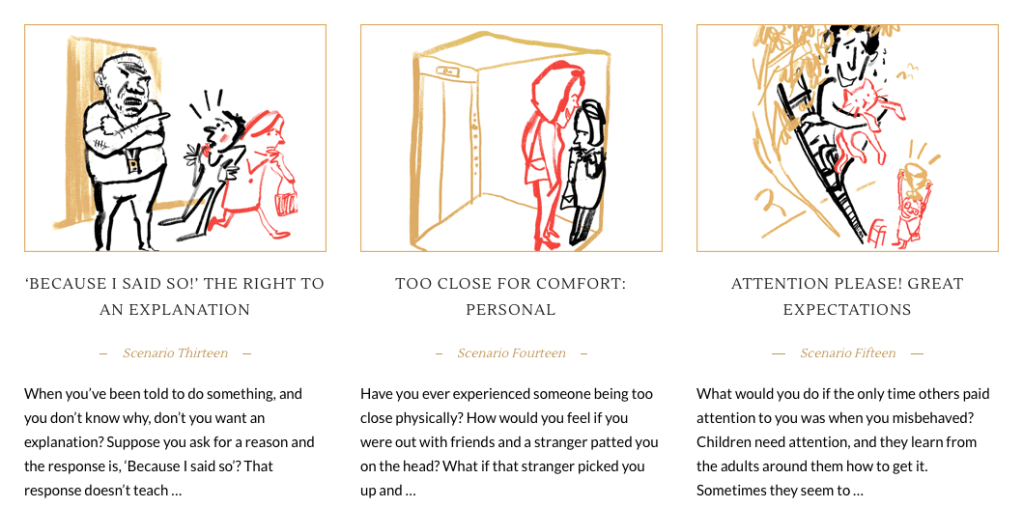
Some current research topics that they touch on involve recent updates on COVID19 and is “advocating to the government, on behalf of the ECEC sector” to identify information that would present itself useful to the community. Other topics include, professional development, child advocacy, learning, health, and nutritional resources, as well as trainings and coolaborating programs like In Their Shoes; where “children have better childhoods when the adults in their lives relate to them with empathy” (ECA, 2020).

There were some surprising insights about early childhood that I gained from exploring this site. As mentioned above, ECA partnered with another organization calle In Their Shoes. In this program, they provide real scenerios that adults can empathize with. They believe that “children have better childhoods when the adults in their lives relate to them with empathy and try to see things from their perspective. They also believe that “children are amazing learners and active contributors to their own learning and experiences, and those of others. They deserve our respect for them as partners—as people who have the right to take an active role in their own lives” (Stonehouse, 2020).

Another noteworthy insight that I found informative was the inclusivity of how much information they had on meeting the needs of children with special needs. They collaborated with another organization called Early Childhood Intervention Australia that shares a “commitment to inclusion in early childhood education and care (ECEC). Its purpose is to create a vision for high quality inclusive practices in early childhood education and care” (Early Childhood Australia, 2020). 

Resources:

Early Childhood Australia. (2020). Retrieved from http://www.earlychildhoodaustralia.org.au

Early Childhood Australia and Early Childhood Intervention Australia. (n.d.) Retrieved from http://www.earlychildhoodaustralia.org.au/wp-content/uploads/2014/06/ECA_Position_statement_Disability_Inclusion_web.pdf

Early Childcare Intervention Australia. (n.d.). Retrieved from https://www.ecia.org.au (under construction)

Stonehouse AM, A. (n.d.). In Their Shoes. Retrieved from http://www.in-their-shoes.com.au

Practicing Awareness of Microaggressions

Microaggresions? What in the world does that mean? Microaggressions are “brief everyday indignities that are verbal, behaviors, or environmental.” They can be “intentionally or unintentionally communicated to women, people of color, to gay/lesbians that have an insulting message behind them that often times causes sever psychological distress and harm” (Laureate, 2011).

Among these microagressions lay branches of other aggressions that target disabilities/abilities, sexual orientation, gender, and racial microaggressions. Within the racial aspect of microaggressions are three more forms of microaggressions:

  • MicroAssult: this is a “blatant, hostile act, intended to hurt the person on a conscious level” (Laureate, 2011).
  • MicroInsults: these insults demean a person’s racial heritage by suggesting they aren’t smart enough and that they are “intellectually inferior” (Laureate, 2011).
  • MicroValidations: this is sad to be the worst of them all. This invalidates your experiential reality” (Laureate, 2011). This happens on a day-to-day basis.

It has been proven that history repeats itself. Have you seen the news? The killings of George Floyd, Alton Sterling, Michael Brown, Kendra James, and many more, didn’t just start within the last few years. Blacks, women, and immigrants, have been dealing with racism, segregation, and various form of microagressions for centuries. Just this week, “George Floyd, a 46-year-old black man, died Monday when a white Minneapolis police officer knelt on his neck for several minutes after he was detained” (Reyes, 2020). And his death seemed to have broke the camel’s back.

So what do we do? Do we continue to let these microaggressions and microassaults, and allow it to get as far as it did with George Floyd? Paige Fernandez, policing policy adviser for the American Civil Liberties Union told USA Today, “‘I’m hesitant to say anybody should step in, because I don’t want people’s lives to be risked, but I do think there is a role, especially for white allies. If they see an incident of police brutality happening, I think they absolutely have to step in and say something, just because officers often interpret black and brown people as threats for absolutely no reason, other than deep-seated racism'” (Reyes, 2020).

There’s so much that’s going on in my head. So many questions, concerns, and fears. Everything I’ve observed and read about George Floyd solidified my perceptions on discrimination, prejudices, and stereotyping people of color. So many emotions fill my body but I have to remember who I represent – God. Being a black mother of two boys, the “talk” of re-education my children on respecting police enforcement as well as knowing their rights and remember their history is almost contradictory. African Americans are and will always be faced and placed within the “Catch-22” parameters of society.

As a parent and professional, it’s hard knowing that my children and the children I come in contact with, do not fully understand the depth of what’s going on around them. We have to be intentional and responsible in teaching them to be aware of the mircoaggressions that are expressed, verbally or non-verbally, is not acceptable, no matter who or where it comes from. Education is KEY.

Resources:

Laureate Education (Producer). (2011). Microaggressions in everyday life [Video file]. Retrieved from https://class.waldenu.edu

Leger, J. (2020). Celtics’ Jaylen Brown Organizes Peaceful Protest in Wake of George Floyd’s Death. Retrieved from https://www.nbcboston.com/news/sports/celtics-jaylen-brown-organizes-peaceful-protest-in-wake-of-george-floyds-death/2134120/

Reyes, L. (2020). USA Today, Bear witness, record, de-escalate: How race may affect what bystanders are called to do in cases like George Floyd’s. Retrieved from https://www.usatoday.com/story/news/nation/2020/05/29/george-floyd-what-bystanders-can-do-diffuse-racial-discrimination/5278808002/

Design a site like this with WordPress.com
Get started